Signs of a Gas Leak in Your Home
Natural gas is safe, clean, and reliable, right up until it is not. A gas leak is one of the few household problems that can turn dangerous within minutes, through fire, explosion, or the carbon monoxide that can come with it. The good news is that your gas system gives you warning signs, and knowing them is the difference between a quick phone call and a real emergency. Here is how to recognize a gas leak in your home, what to do the moment you suspect one, and how to prevent them in the first place.
What Does a Gas Leak Smell Like?
Natural gas is naturally colourless and odourless. Utilities add a chemical called mercaptan so you can smell it, which is why a leak smells like rotten eggs or sulphur. If you notice that smell anywhere in your home, treat it as a gas leak until proven otherwise. As a rule, the stronger the smell, the more urgent the situation.
The Warning Signs of a Gas Leak
A gas leak rarely announces itself with just one clue. Watch for any of these:
- A rotten egg or sulphur smell, which is the clearest sign.
- A hissing or whistling sound near a gas line, appliance, or meter.
- A white cloud, mist, or bubbling in standing water outside near the gas line.
- Dead or dying plants and grass in a patch near your gas line, with no other explanation.
- A gas bill that climbs for no reason.
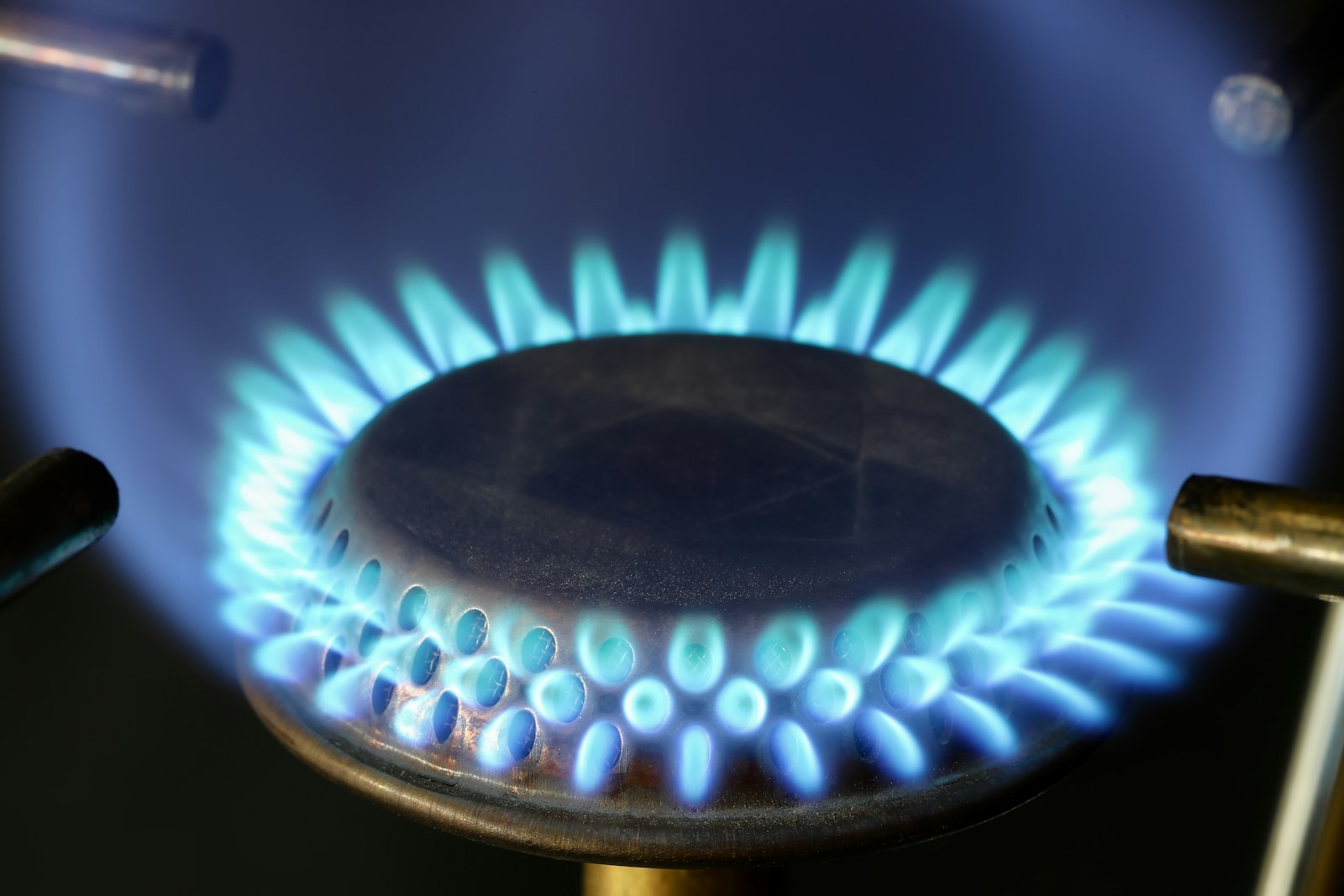
- A pilot light that keeps going out, or a yellow or orange flame instead of a steady blue one on your furnace, stove, or water heater.
- Physical symptoms that ease when you leave the house (more on these below).
Physical Symptoms a Gas Leak Can Cause
A leak lowers the oxygen in your home, and the exposure shows up in how you feel. Watch for headaches, dizziness or light-headedness, nausea, fatigue or drowsiness, trouble breathing, and irritated eyes or throat. One telling clue is timing. If these symptoms improve when you step outside and return when you go back in, your home is likely the source. Pets acting unwell for no clear reason can be an early warning too.
The Hidden Danger: Carbon Monoxide
A gas leak is one risk. Carbon monoxide is the other, and it is more dangerous because you cannot smell it. Carbon monoxide (CO) is colourless, tasteless, and odourless, which is why it is often called the silent killer. It is produced when a gas appliance burns fuel incompletely, for example through a cracked furnace heat exchanger or a blocked vent. According to Technical Safety BC, early symptoms of CO poisoning include headache, dizziness, and nausea, and as levels rise they can progress to confusion, chest pain, and loss of consciousness. The only reliable way to detect CO is with a working carbon monoxide alarm on every level of your home. If a CO alarm sounds, get everyone outside and call 911.
What to Do If You Suspect a Gas Leak
If you smell gas or suspect a leak, act quickly and calmly. FortisBC, the natural gas provider for the Lower Mainland, recommends these steps:
- Leave the building right away and take everyone, including pets, with you.
- Do not light matches or candles, and do not smoke.
- Do not turn light switches or appliances on or off, and do not use anything electrical.
- Do not use your phone, garage door opener, or start a vehicle inside or near the home.
- Leave the door open behind you and move a safe distance away.
- From that safe distance, call the FortisBC 24 hour emergency line at 1-800-663-9911, or call 911.
- Do not go back inside until a professional confirms it is safe.
Even a faint smell is worth a call. The utility treats every report as real, there is no charge, and there is no reason to feel embarrassed for being cautious.
What Not to Do
The wrong move can turn a leak into a disaster. Avoid these:
- Do not try to find the leak yourself or operate the gas shutoff unless you have been told to.
- Do not flip any switch thinking it will help. A single spark is enough to ignite gas.
- Do not assume it will clear on its own.
- Do not attempt any gas repair yourself. In British Columbia, gas work must be done by a licensed gas fitter, and doing it yourself is both unsafe and against code.
How to Prevent Gas Leaks
Most gas leaks are preventable with a little routine care:
- Have your gas appliances, furnace, and water heater inspected every year by a licensed gas fitter.
- Install carbon monoxide alarms on every level of your home and test them regularly.
- Keep the area around your furnace and water heater clear and ventilated.
- Never ignore a pilot light that will not stay lit or a flame that burns yellow.
- Use only a licensed professional for any gas installation or repair.
A yearly inspection is the single best protection, because a trained gas fitter catches the small problems (a loose connection, early corrosion, a venting issue) before they ever become a leak.
When to Call Rockson and Sons
If you smell gas right now, leave and call FortisBC at 1-800-663-9911 or 911 first. Once the immediate danger is handled, or if you simply want your gas appliances checked before heating season, our licensed gas fitters serve Surrey, Langley, and across the Lower Mainland. We handle gas appliance inspections, furnace and water heater service, and gas line work safely and to code, and we offer emergency service when you need someone fast. Book your annual gas safety check and keep your home and family protected all winter.